
01 / WATERCOLOUR
Colour with its own way of telling a story.
Colour runs through Laura Caselles' work: characters, animals, flowers and imagined worlds. Her watercolour isn't simply a splash around a drawing. The relationship between shapes, the contrast and the spaces of skin that let a piece breathe are all part of the composition.
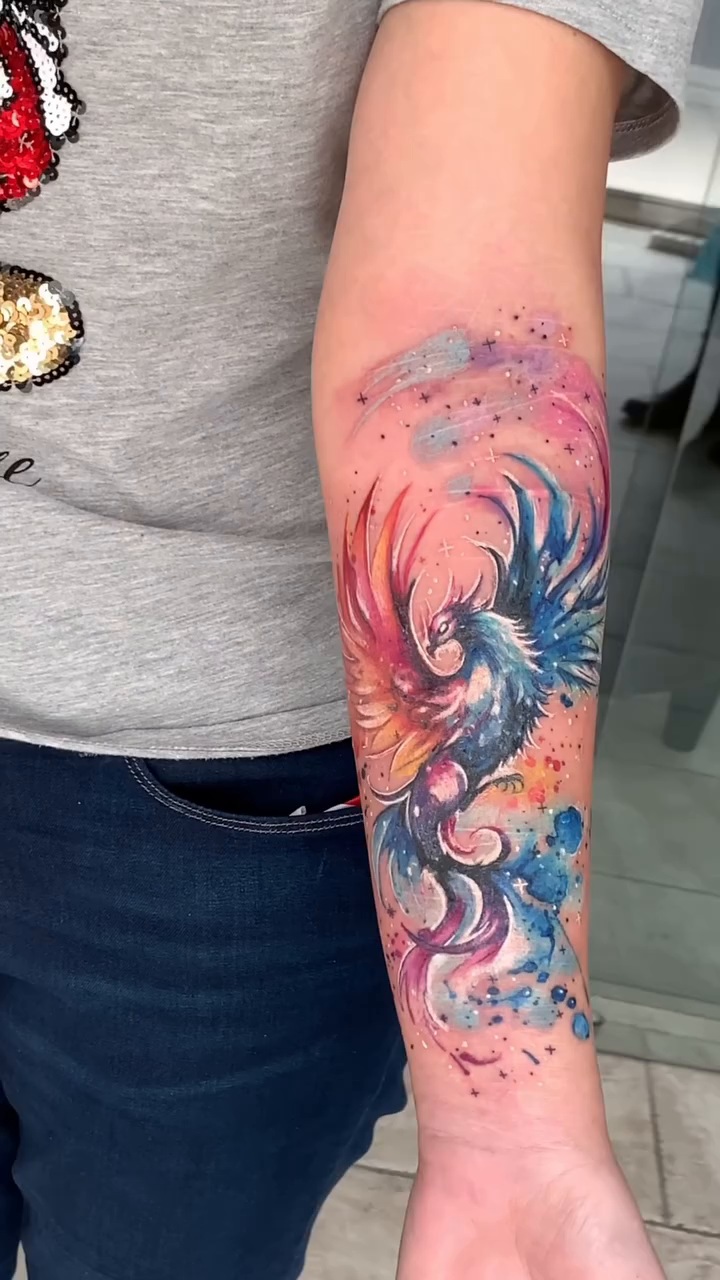
Drawing and colour, working together.
For this phoenix, Laura combined blues and oranges with pink washes and small details around the bird. Its shape remains recognisable: lines, colour and the skin between them all belong to the same composition. Other pieces begin with a flower, an animal or several characters brought together in a scene.
If something in a piece catches your eye, use it to explain your idea—not to copy someone else's tattoo.
Explore the tattoos ↗BEYOND THE DAY OF THE TATTOO
And years later?
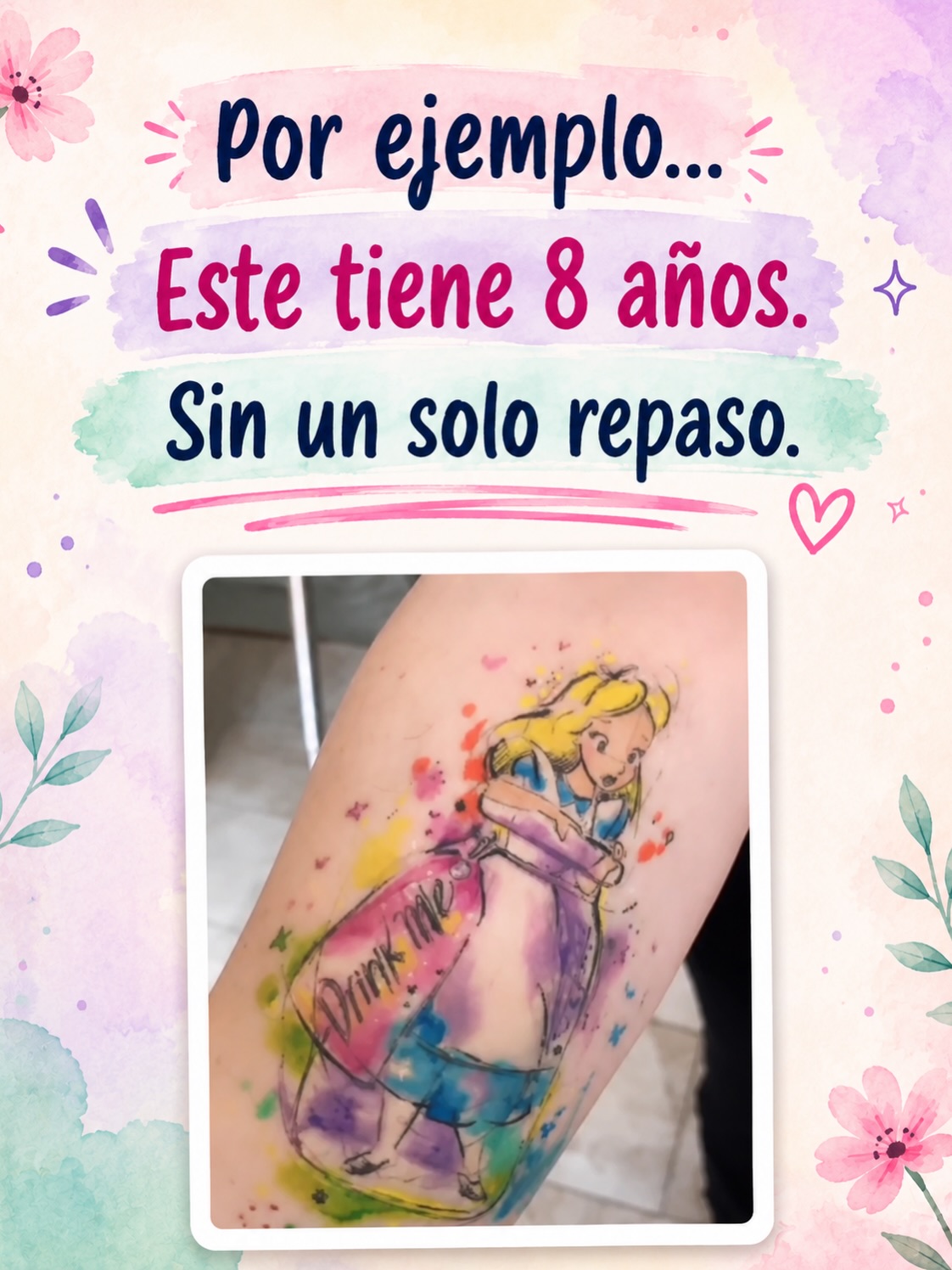
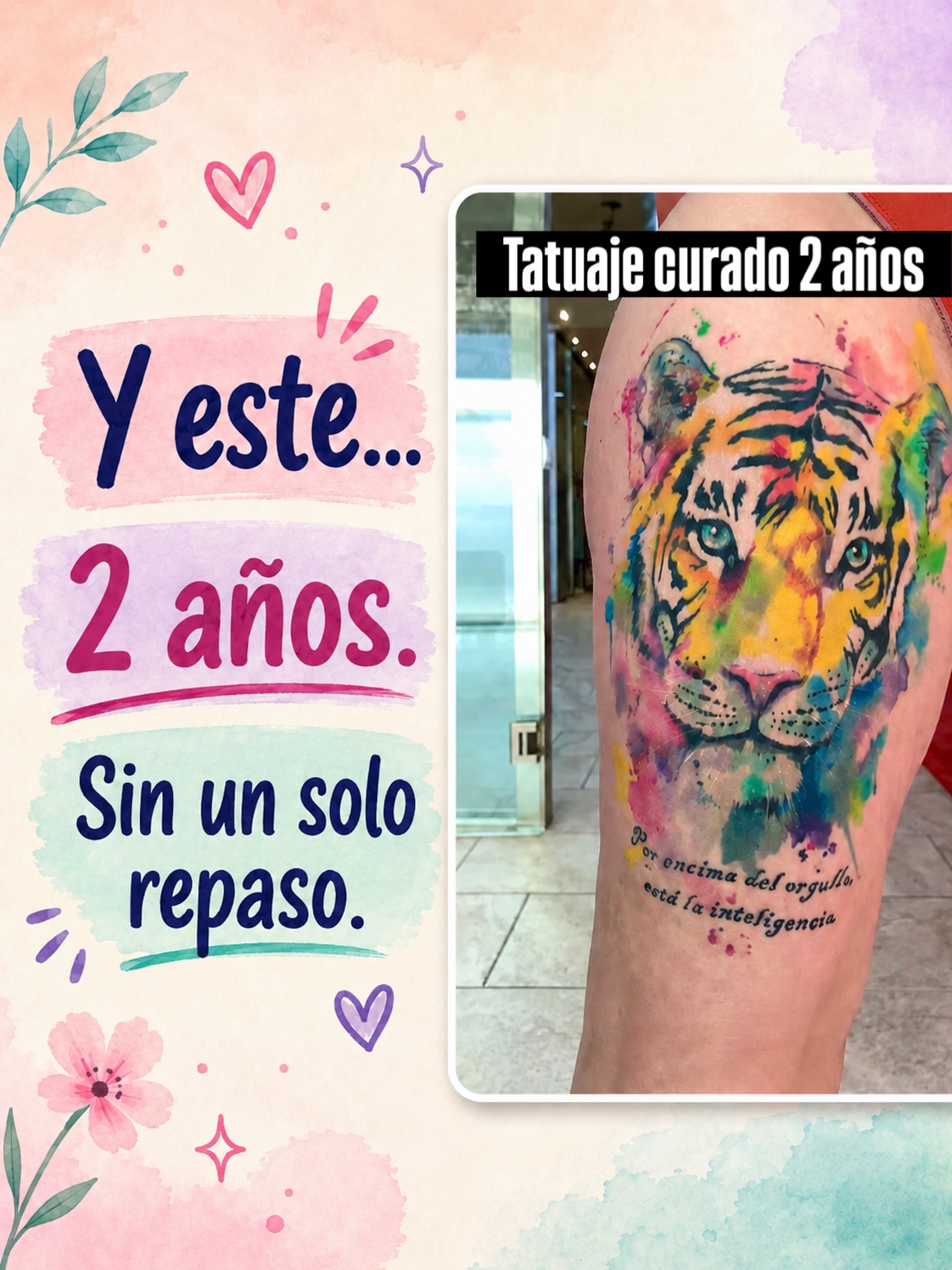
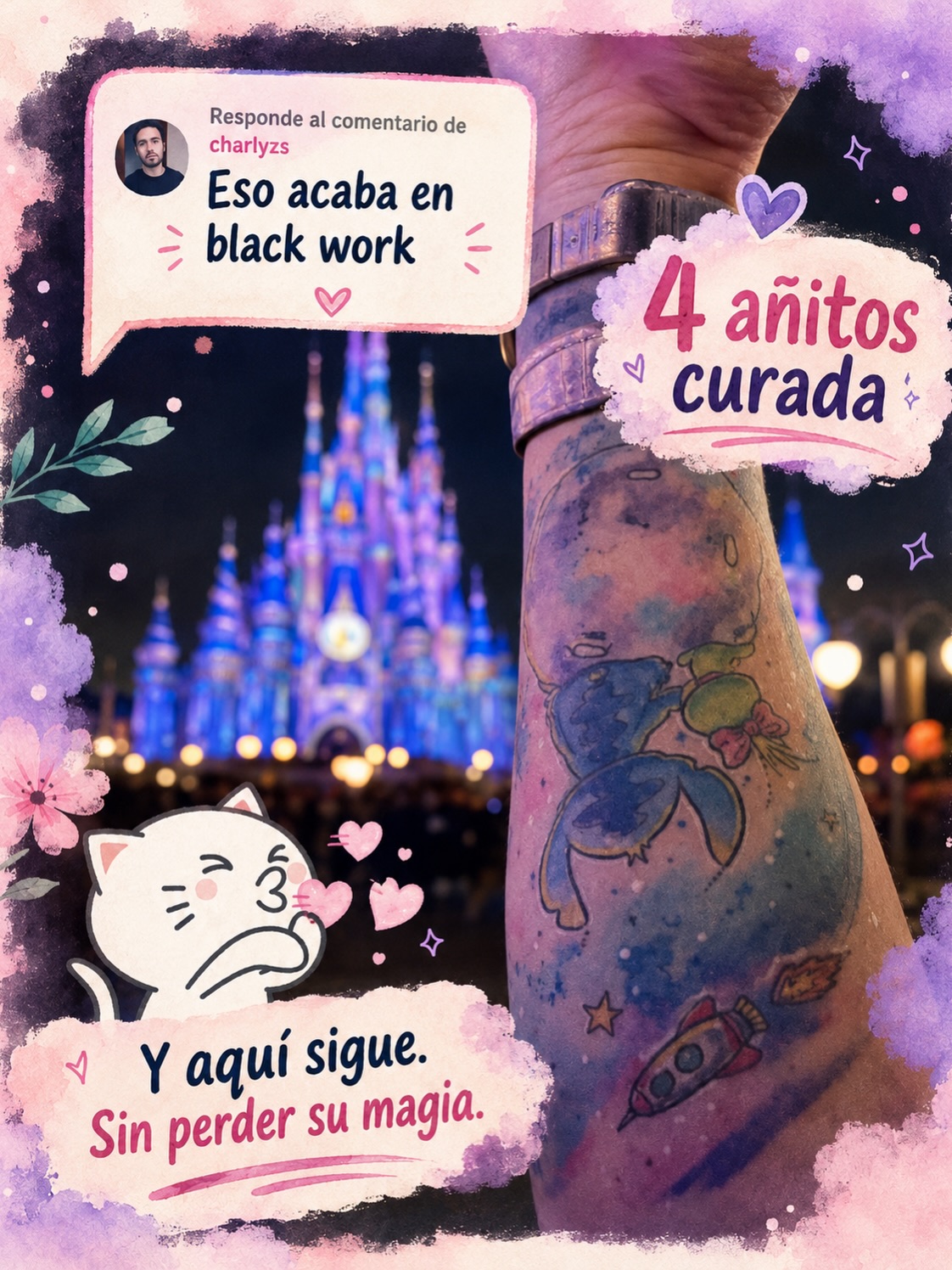
Three different examples, with the context Laura gives them in her post.
MORE THAN A BEAUTIFUL PHOTO
What should I look for in a watercolour tattoo artist?
If you like Laura's watercolour work, look beyond the photo that made you save a post. Choose a piece that appeals to you, then look at it from a few different angles.
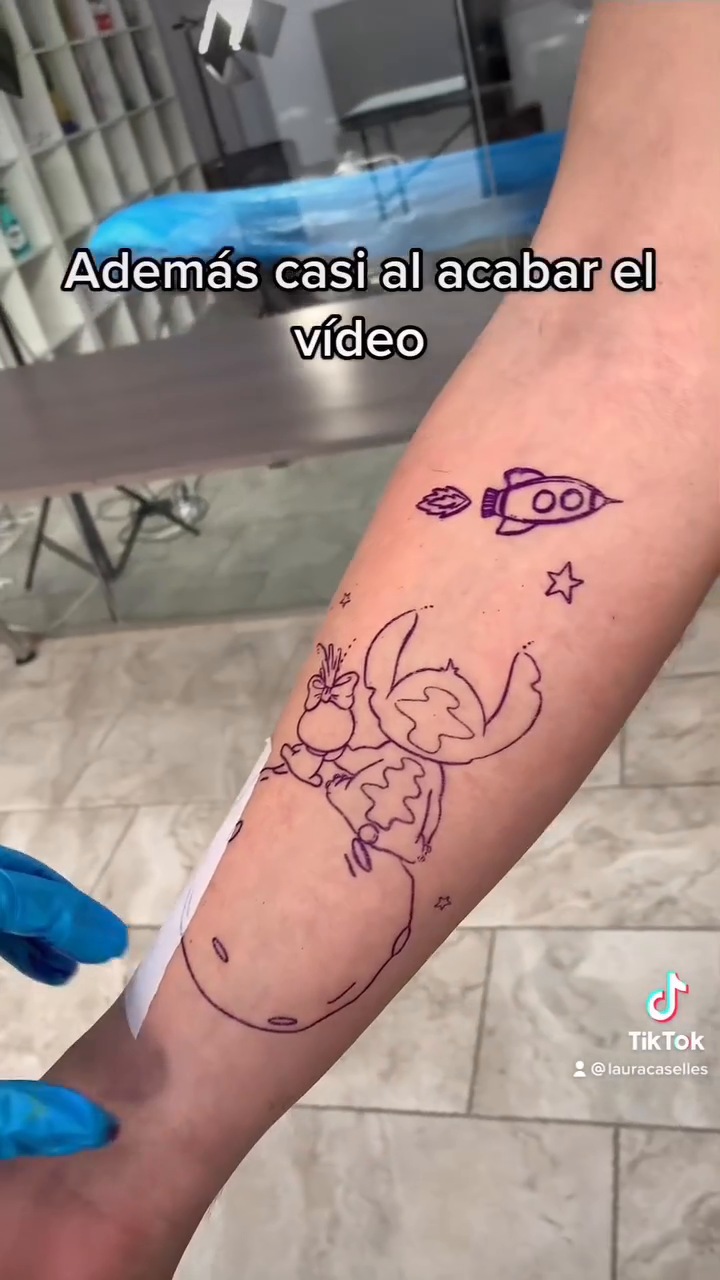
- The whole piece and the details. In Stitch and The Little Prince you can see the colour up close and the full composition on the forearm. One view shows the details; the other shows the space and the flow of the drawing.
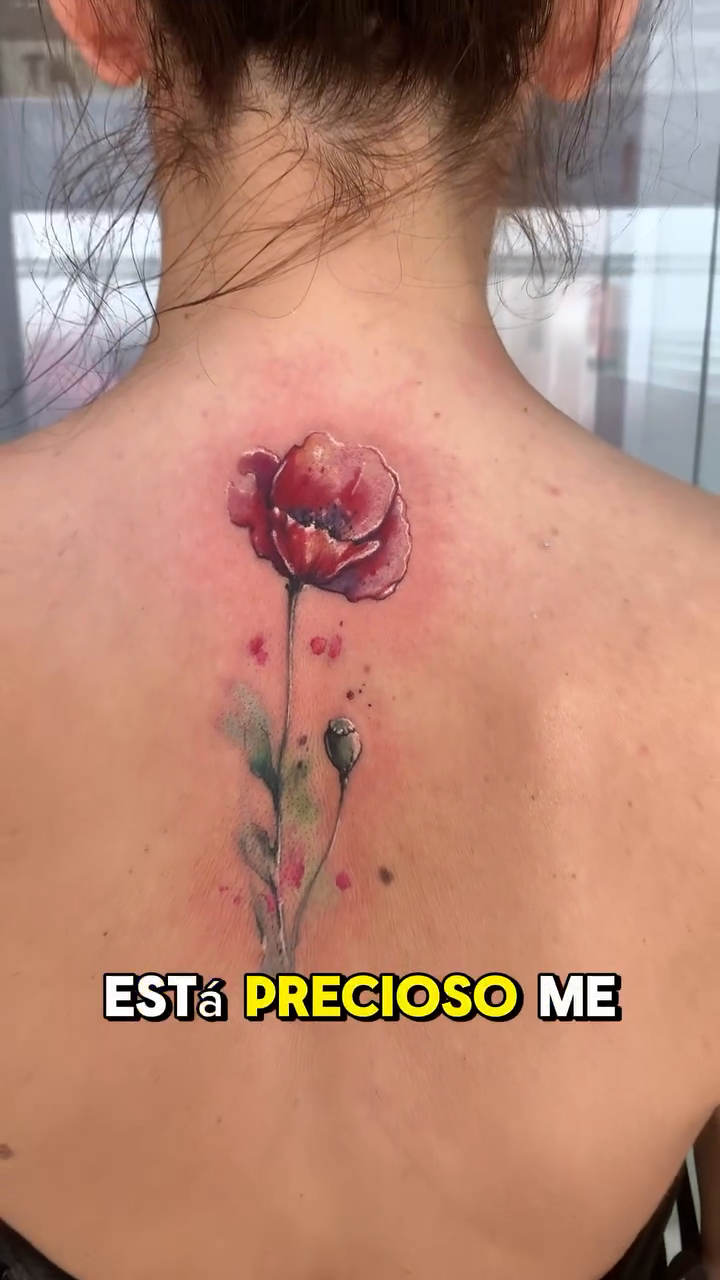
- How it came together. This stencil shows where Laura placed the figures before adding colour. She brought two references into one composition: the planet, characters, stars and rocket. In the flower on the back you can explore a different approach, with a more realistic feel and a different palette.
- Examples over time. In Healed tattoos records the ages Laura gave when sharing Alice, the tiger and Stitch, and which were described as having no touch-ups. That context belongs to those photographs; it isn't a guarantee that every tattoo will age the same way.
- Clients' experiences. In Testimonials lets you read messages shared in Laura's Stories and see the original screenshots where available. A personal experience and a tattoo's appearance over time are different kinds of evidence. Both are worth looking at.
When you get in touch, explain what caught your eye: a colour, the placement of the figures, the size or a detail. You don't need to gather other people's tattoos to copy. Pointing out what you like in each reference helps explain your idea.
Find out how Laura works ↗A closer look at watercolour.
Is watercolour only for new tattoos?
No. Laura also uses watercolour to transform existing tattoos. In the Balloons project, she kept the paper boat and brought it into a larger scene with a hot-air balloon, moon, sea and colour. A cover-up has to begin with the drawing already on the skin.
See a watercolour transformation ↗Can I see examples other than characters?
Yes. The healed selection includes a tiger, flowers, a crab and other subjects. You can see how colour works with different drawings and the age Laura gives for each photograph.
Explore subjects and healed results ↗Do I need to bring a finished drawing?
You don't need to work out the whole composition before talking to Laura. Explain the subjects you like and what draws you to your references: a character, a combination of colours, or the way a drawing follows the body. In How I work, Laura explains how she develops an idea and the appointment terms.
Find out how she works ↗BUILDING THE COLOUR
The watercolour effect is in the technique.
Laura explains that she creates her watercolour effect through colour, contrast, translucent layers and spaces of skin—not by diluting the inks. The difference is in how she works with them. Beyond freshly finished colours, the drawing needs to read clearly too.
Fantasy watercolour and a more realistic approach.
In one of her floral pieces, Laura discussed these two approaches. The flower has a more realistic watercolour feel, even though its palette isn't that of a natural flower. Other compositions take colour into a more imaginary world. You don't have to choose a label before getting in touch: just point out what you like in each example.
Healed tattoos brings together work Laura shared years later: Alice, the tiger and Stitch. Each image keeps the time reference from her post.
The healed examples and the floral piece come from posts made as part of a paid partnership with Bepanthol Tattoo.
MORE STORIES FROM LAURA
Two more ways to tell a story through colour.
Watercolour
Watercolour without a burst of every colour?
A more realistic floral approach: shape, volume and a personal colour palette.
Read the story ↗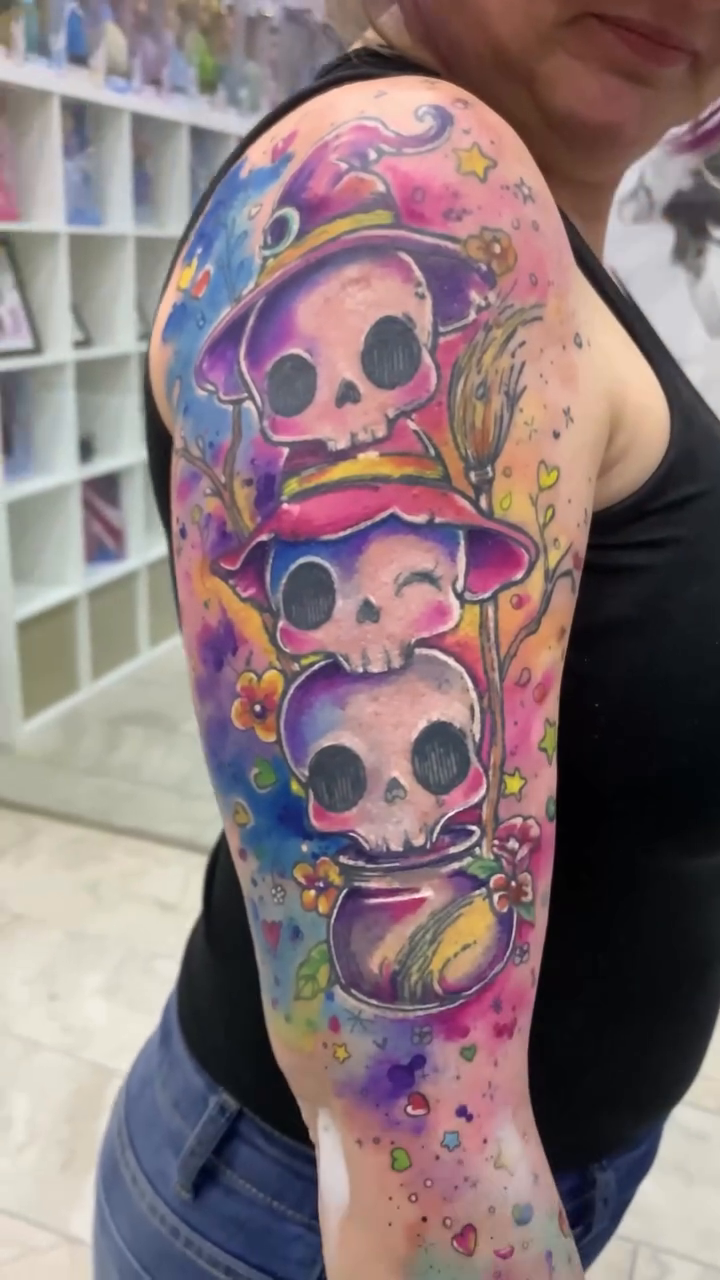
Watercolour
What if you want to continue a piece and add colour?
Little skulls already drawn, the colour stage and one particular choice: purple hearts.
Read the story ↗YOUR IDEA, YOUR STARTING POINT
Your idea can begin with colour, too.
Tell Laura which subjects appeal to you, where you imagine the tattoo and roughly how big it would be. If you like an example, explain whether it's the colours, the drawing or the way it sits on the body.
Ask about my watercolour tattoo ↗