
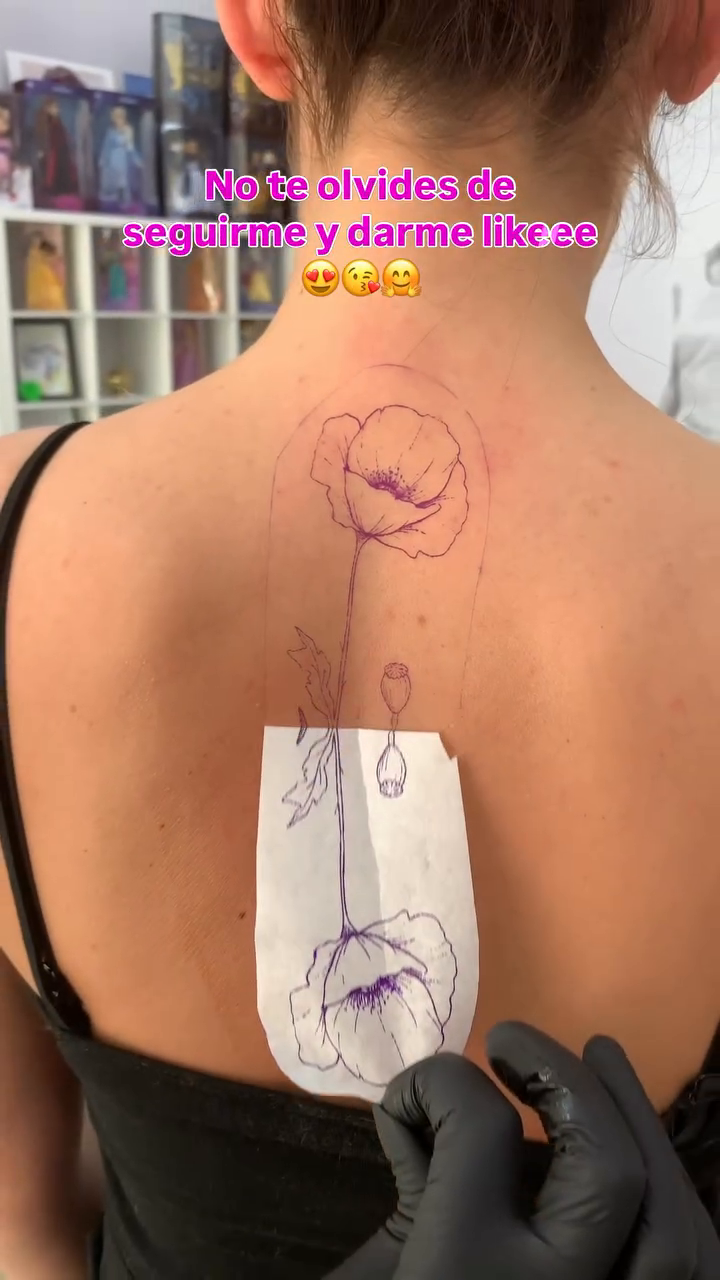
01 / Watercolour · Flowers · Back
First, we needed to see it in place
The stencil printed so faintly that you can hear me joking in the video about having to wait for the result to see it in all its glory. Still, the placement shows the idea: a vertical flower, its stem following the line of the back.
I wasn't trying to fill the whole area. The composition focuses on the flower and its downward flow, with space around it. Before any colour, that arrangement is already visible in the stencil.
02 / Watercolour · Flowers · Back
Watercolour doesn't always mean every colour
At the end of the reel, I ask you to choose a team: multicoloured, very fantastical watercolour, or something closer to a realistic form. This flower belongs to the second. It keeps a recognisable shape and depth in the petals while still carrying my way of working with colour.
Rather than turning it into a rainbow, I brought together reddish and violet tones in the flower, greens in the leaves and little loose touches around them. If you like watercolour but can't picture yourself wearing an explosion of colours, this is an example we can discuss.
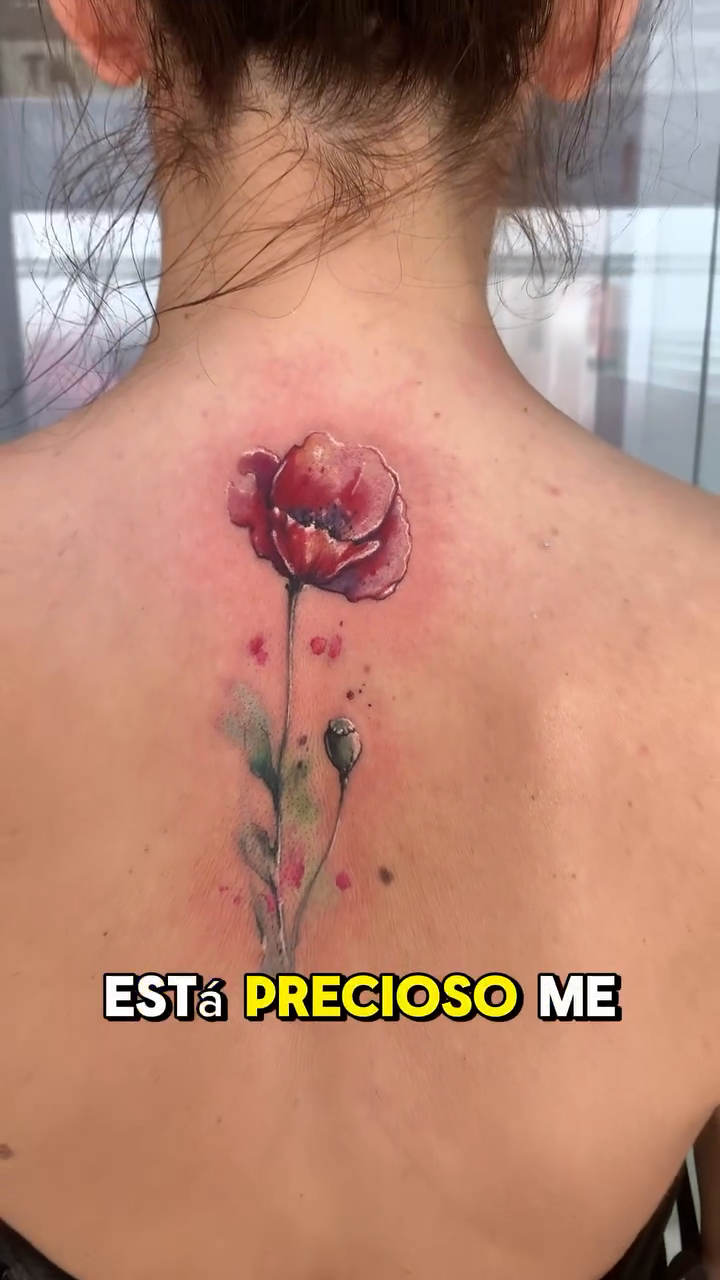
03 / Watercolour · Flowers · Back
The flower has form; the colour can wander
Up close, you can see dark areas between the petals and lighter edges defining their folds. Follow the stem down and you'll find leaves and a bud, while some washes sit outside the outlines.
That's what I wanted to show: you don't necessarily have to choose between a readable flower and a watercolour interpretation. Both are here. The photo shows the result of that session; I have other healed examples for discussing how colour looks years later.
04 / Watercolour · Flowers · Back
Want a flower? Let's start with how you'd like to see it
When you bring references, explain what draws you to them: the flower's shape, a particular palette, loose washes or where you'd like to wear it. Falling for the petals in an image isn't the same as wanting to copy its entire composition.
We can use those preferences to discuss your design. This piece is especially useful for explaining something that can be hard to put into words: I want watercolour and colour, but I still want to see the flower clearly.