
GUIDES & QUESTIONS
Before you decide.
An idea doesn't always start with a finished drawing. Sometimes you have several references; sometimes, a tattoo you'd like to change without knowing how yet. These guides bring together Laura's work to explore those differences: combining ideas, keeping one part, creating a cover-up or seeing how watercolour looks years later.
BEFORE CHOOSING ANOTHER DESIGN
I don't like my tattoo: rework it, cover it or remove it?
Before thinking about what could go over it, there's a useful question to ask: what do you want to see when you look at that part of your body? You might like the idea but not how it turned out. You might want to keep just one detail. Or you might not want a tattoo there at all. Those are different starting points.
These cases help you tell them apart. You don't need to know whether to call your project a rework, a refresh or a cover-up.
KEEPING SOMETHING CAN MEAN DIFFERENT THINGS
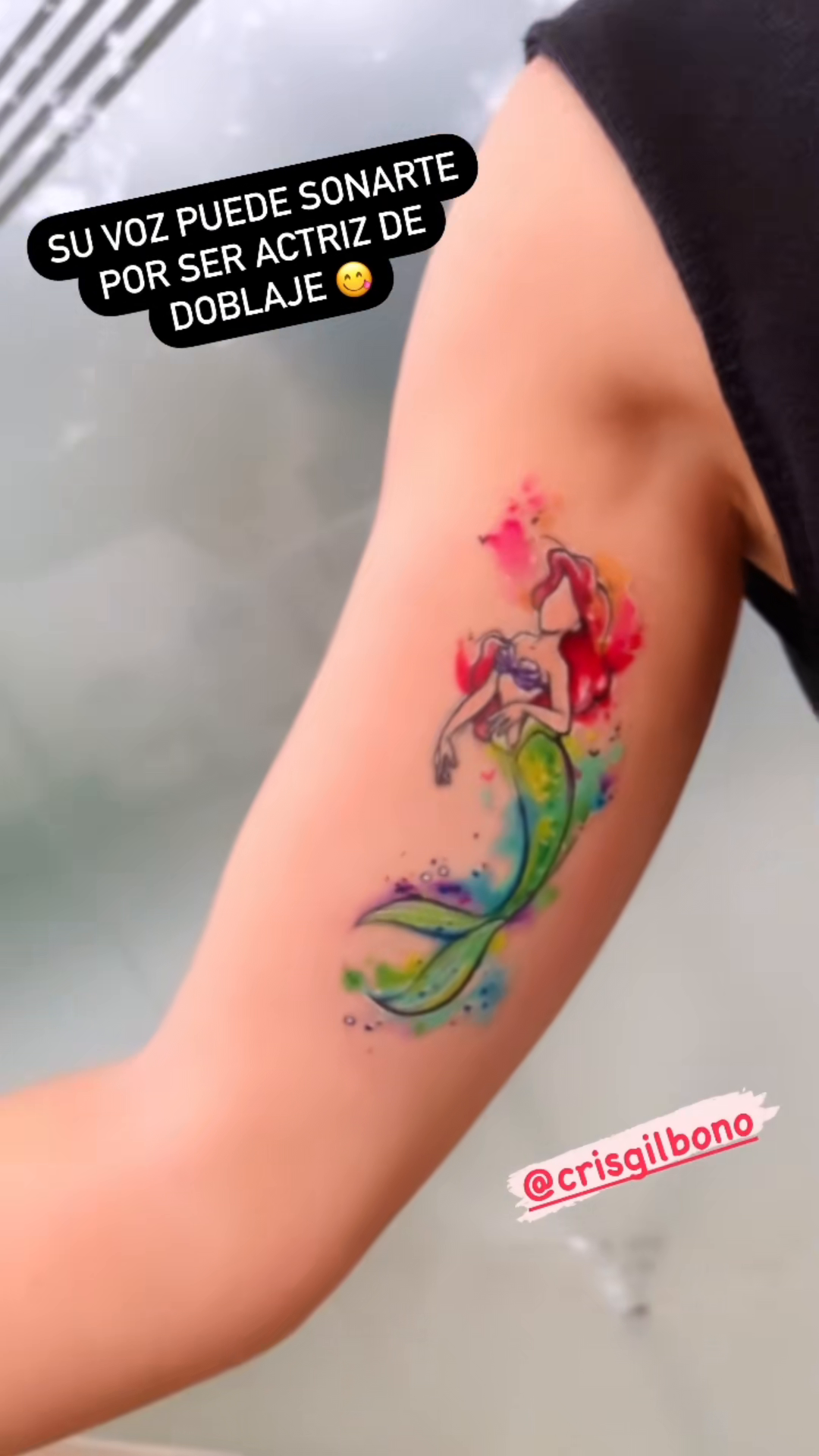
I still love the character, but not my tattoo.
With Ariel, Laura kept working with the little mermaid: her pose and recognisable features remain, while the drawing, colour and surroundings change. She kept the cupcake idea too. You can see their starting points in Rework a tattoo and in the cupcake rework.
With the dark owl, on the other hand, she created a new, larger and more colourful owl. With Totoro, a different composition featuring the character again. Keeping the animal or character doesn't mean keeping its outlines, size or arrangement.
So compare more than the brightness of the colours: look at the space, the outline and how much new drawing surrounds it. If you don't want to go bigger, say so. That's a limit Laura needs to assess, not something another person's result can guarantee.
KEEPING ONE PART
There's one detail I do want to keep.
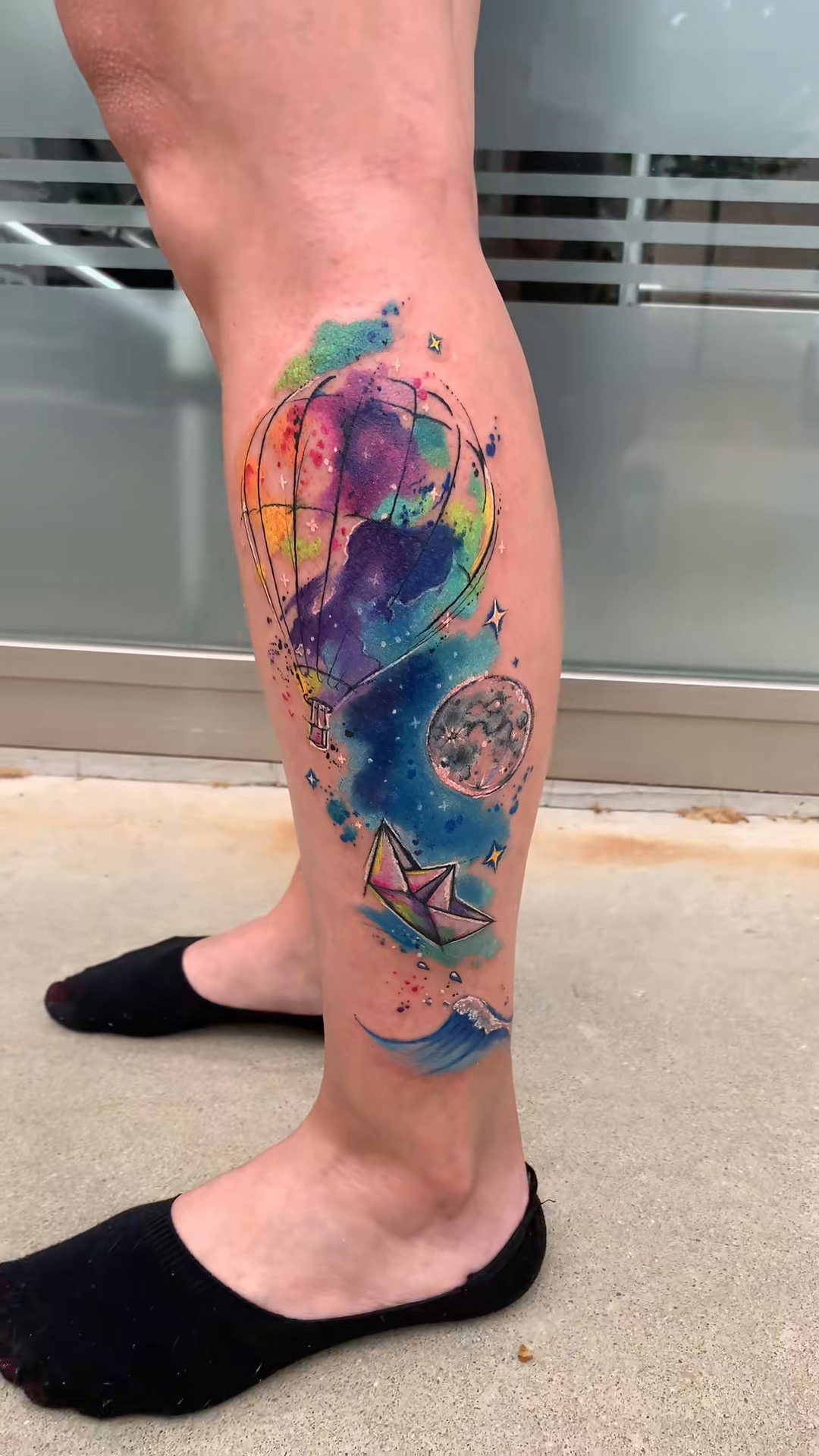
In the balloon project, Laura kept the paper boat and changed the scene around it. Look at how much space the new piece takes up: keeping one thing doesn't always mean leaving the rest as it was.
If a detail matters to you, explain that from the start. Point out what you'd keep, what you'd change and whether you're open to a larger design.
You might also want a different subject: in the watercolour feather Laura moved from three birds to a different composition. That's a different intention, not the same solution in new colours.
See the balloons before, the stencil and the result ↗WHEN YOU WANT SOMETHING DIFFERENT
What if I don't want any ink there any more?
Then your aim is different from a cover-up. These examples show new tattoos over existing ones, not ink removal. To explore removal, consult a qualified healthcare professional. If you're already having treatment, don't change their advice based on a photo comparison.
Laser removal may take several treatments and isn't always complete. Another person's case can't tell you your outcome or how many sessions you would need.
Healthcare reference: FDA: tattoo removal options and outcomes ↗.
IF YOU'VE ALREADY TRIED LASER
I've had laser, but the tattoo is still visible. Can I cover it?
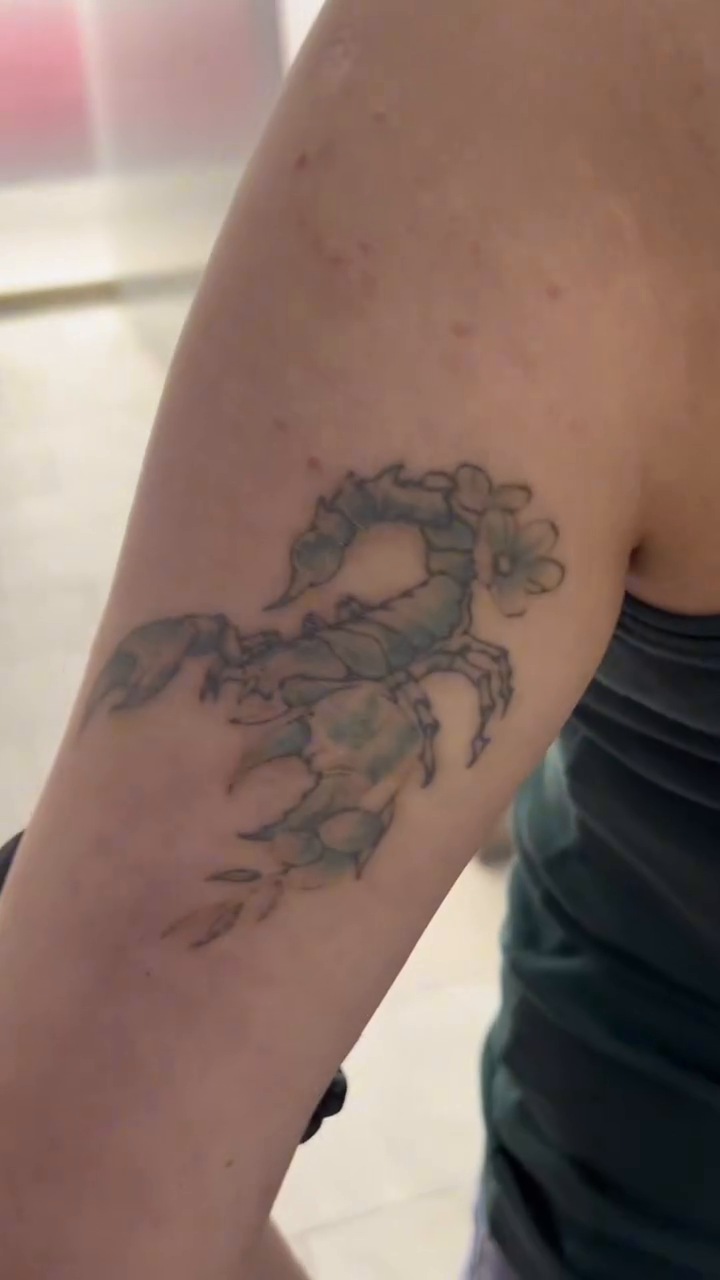
Laura documented a case with that starting point. In the video, she explains that this scorpion had been through four laser sessions and still looked dark and greenish. She transformed it into a composition of lotus flowers and watercolour.
This isn't a treatment schedule or a promise for another tattoo. What helps is seeing the starting point, stencil and result, and separating two aims: removing the ink or changing the design you wear.
From scorpion to flowers: read the story ↗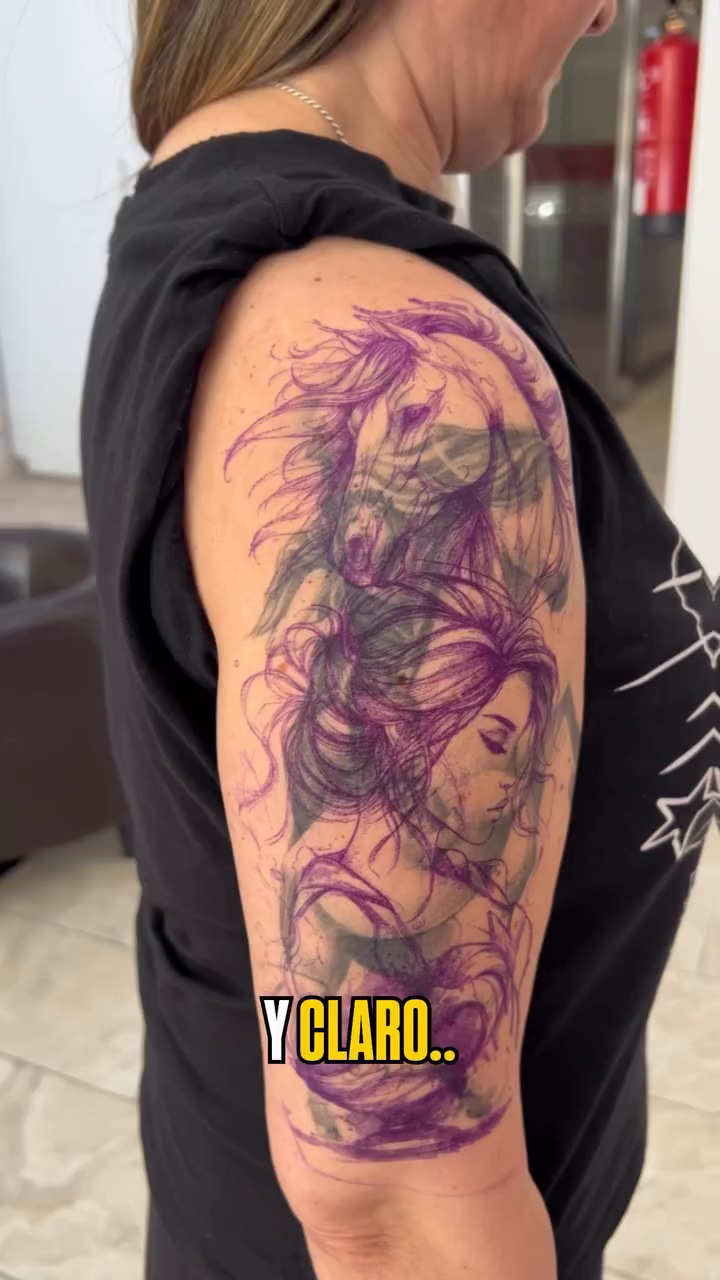
PREPARING YOUR ENQUIRY
What do I tell Laura if I don't have a design yet?
You don't need a finished drawing. Explain what you want to represent, where you picture it and what you like about your references. If you already have a tattoo, add what you'd like to keep and what you'd rather change. That starting point is more useful than finding the right label, whether cover-up or rework.
- What has to be there. A character, an animal, a flower or a particular detail. If it means something to you and you want to share it, explain in your own words. You don't need to invent a big story to justify an idea you like.
- What draws you to each image. It might be the colours in one, the scene in another or the way a third fits the arm. Mention what you don't want to bring into your piece too.
- The placement and impact you want. Explain whether you imagine something subtle or a larger composition. If you don't want it to extend beyond a certain area, say so: that's a limit to assess, not a promise that any design will fit.
- What to keep and what to change. Keeping a character doesn't always mean keeping its outlines or size. The horse and portrait cover-up shows why it's worth looking at the stencil and the surrounding space too.
These are ways to explain your idea, not new booking requirements. Questions about your skin or a treatment need professional assessment, not comparison with someone else's photo.
SEVERAL IDEAS, ONE PERSONAL PIECE
I like several things. How do I bring them together?
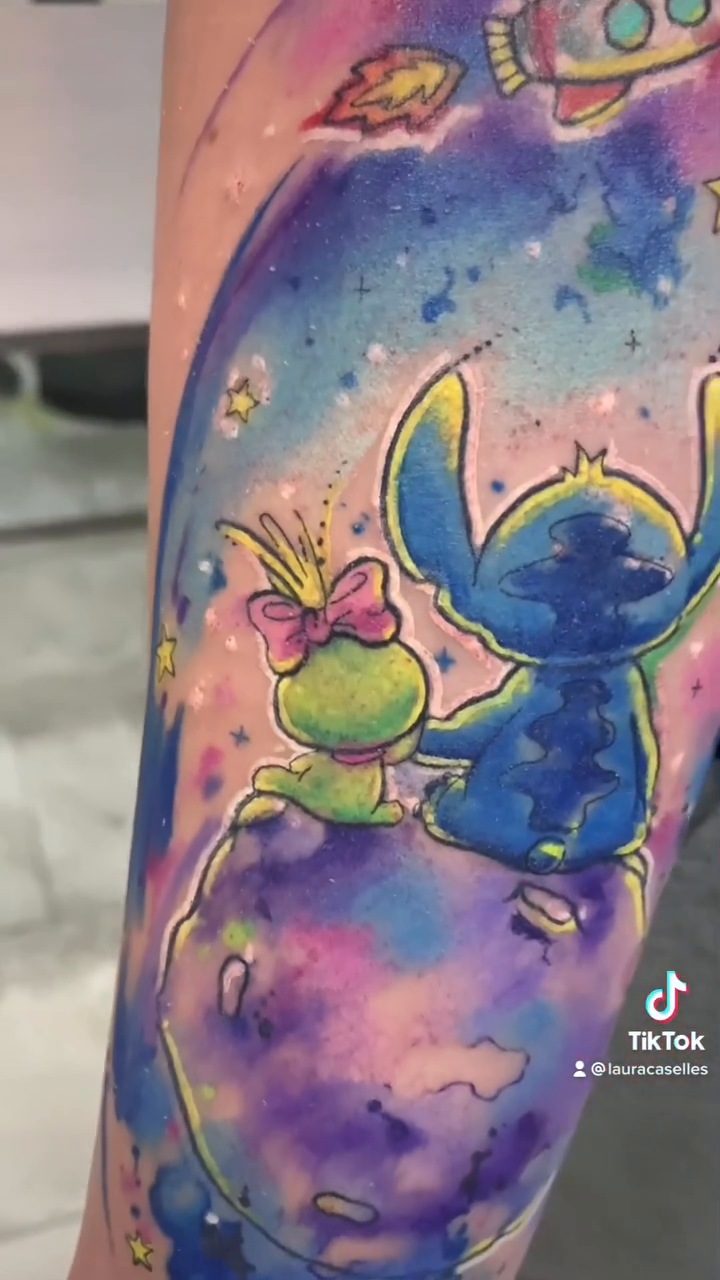
For this piece, Laura brought Stitch and The Little Prince references together around a planet, stars and a rocket. Rather than appearing as separate drawings, the motifs share a setting and a colour palette.
When looking at a reference, separate three questions: what should take centre stage, what can accompany it and what do you like about the atmosphere? Wanting that character isn't the same as wanting a space scene or those blues and purples.
It also helps to distinguish what matters most from what you're happy to leave open. You don't have to work out how it all fits: that conversation is part of developing the idea.
See how the Stitch and The Little Prince scene came together ↗It was the client's first tattoo, as Laura explains in the video. In the story, you can compare the stencil, the colour work and the full result.
FROM IDEA TO DESIGN
Useful things to know before getting in touch.
Do I need to draw or have the composition ready?
No. Bring your idea and explain the details that matter. As Laura explains in her process, she develops the design with the client in person and adapts the composition to their body. A reference helps explain what you're looking for; it doesn't mean you need every element in place already.
Can I ask for the same tattoo I saw in a photo?
You can use it to explain what you like. Laura says she doesn't copy other tattoo artists' work or repeat her own pieces identically. The starting point may be similar; the aim is a composition of your own, not a copy of someone else's arm.
Will I receive a sketch before the appointment?
No. Laura explains that she doesn't send sketches before the tattoo appointment: she works through the details in person. To discuss your idea and ask about information and prices, use her usual form and read the full terms before booking.
It's my first tattoo and I want to combine several references.
Stitch and The Little Prince: stencil, process and result.
My tattoo isn't what I imagined, and I'd like a different design.
From three birds to a watercolour feather: a transformation with stencil, process and result.
I want to cover a large, dark tattoo with colour.
Horse and portrait: the before photo, stencil and finished composition.
I want to change my tattoo, but keep one part.
Balloons and a paper boat: before, stencil and result.
What do healed watercolour tattoos look like?
Alice, the tiger and Stitch in Laura's post.
I'm looking for tattoo ideas over scars.
The forearm phoenix: before, result and details of a colour composition.
I still like my tattoo, but I'd like to give it new life.
Reworking the drawing and colour without changing the subject.
I have an idea, but I don't know how to draw it.
How Laura describes developing her projects.
I'd like to read some reviews before getting in touch.
Experiences from people who've been here, with their messages and related tattoos.
LOOKING BEYOND DAY ONE
What can a healed tattoo photo tell me?
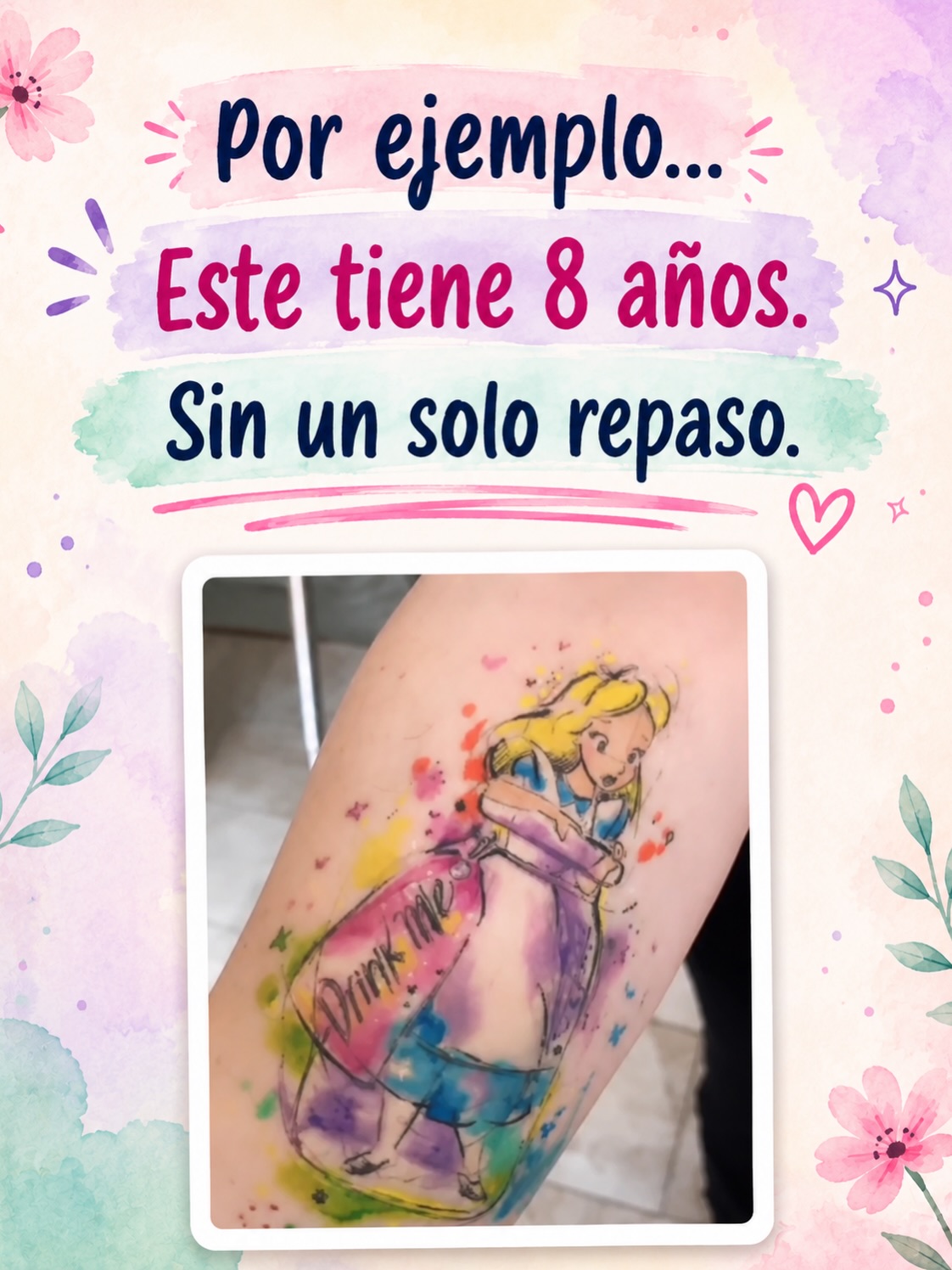
Laura also shows her tattoos after they leave the studio. In the Healed carousel, she brought several pieces together and stated their ages: Alice, eight years; the tiger, two; Stitch, four. Look at how the figures remain readable, the contrast and the spaces between colours.
- When was the photo taken? Laura presents Alice at eight years and the tiger at two. Those are the ages stated in that post, not figures we keep adding years to.
- Was it touched up? Alice and the tiger are described as having had no touch-ups. Stitch is shown four years healed, but that image doesn't provide the same information about touch-ups.
- Is it the same tattoo at two different times? Alice, the tiger and Stitch are different pieces, not a before-and-after sequence. Lighting, distance and framing also differ between the photos.
Laura shared these examples in a carousel produced as a paid collaboration with Bepanthol Tattoo.
See the healed tattoos and their explanations ↗Healed tattoos and aftercare aren't the same thing.
Healed tattoos shows pieces Laura shared some time after tattooing them. Aftercare is different: that's where you'll find her advice for looking after your tattoo after the appointment.
Read the aftercare guidance and note anything you'd like to ask Laura before your appointment. Keeping that information handy is more useful than trying to work out aftercare from a photo of the result.
Read the aftercare guidance ↗YOUR IDEA, YOUR STARTING POINT
What would you like to create?
Share your idea with Laura. If you would like to transform a tattoo, send your enquiry through the usual form.
Tell Laura my idea ↗