
01 / A COVER-UP IN COLOUR
She didn't want to give up its meaning
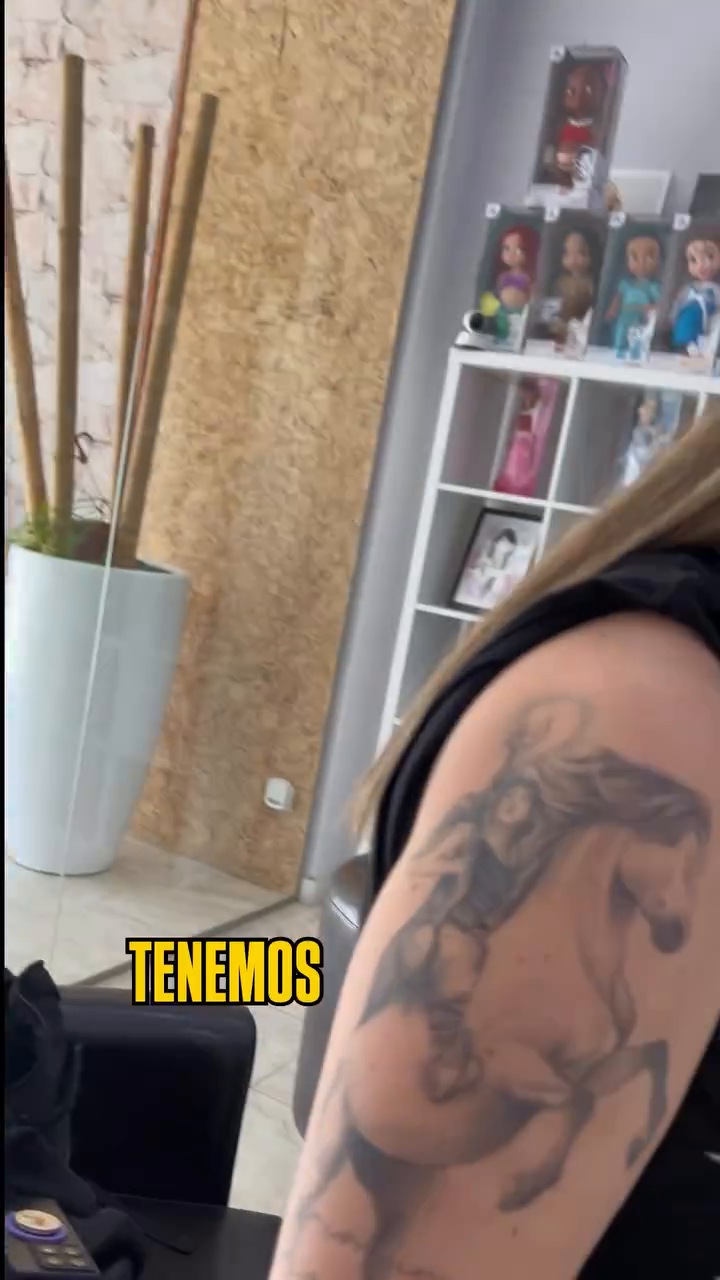
Sometimes it's the tattoo you want to change, not the story behind it. That was very much the case here. The warrior figure in the earlier drawing represented the effort of pursuing her dream of becoming a nurse. It wasn't a character chosen at random: there was a calling behind it.
The horse had a personal meaning too, connected to the Chinese zodiac. All of that was part of what my client wanted me to consider. She wasn't happy with the tattoo's appearance, but covering it didn't mean she wanted to leave behind what she'd wanted to express.
For me, that's where the work began: understanding what needed to change and what still mattered. Then came the challenge you can see in this photo: a large figure, with dark lines, already taking up much of the arm. I had to work with that ink, not a blank canvas.
02 / A COVER-UP IN COLOUR
A horse and a female figure, told differently
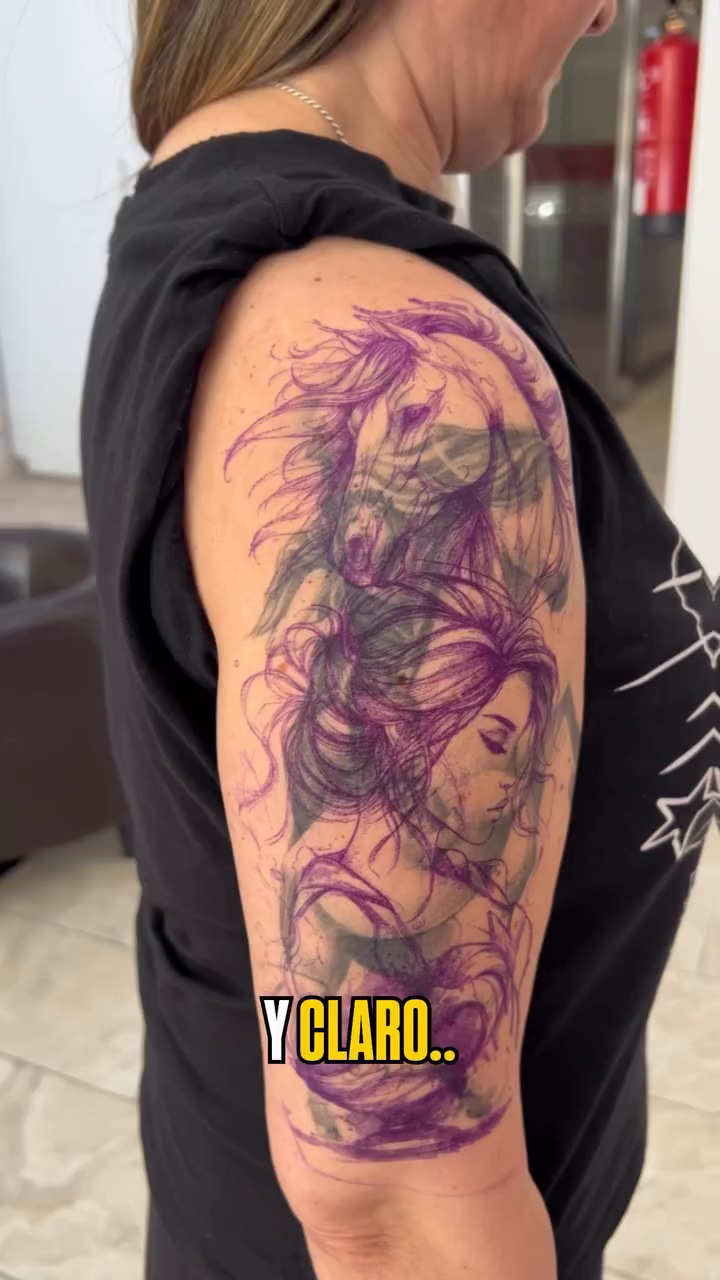
In the new composition, I placed the horse's head above a woman's face. The hair and curves connect the two figures, while the piece extends around the earlier tattoo. I changed its arrangement and visual language: I didn't simply go over what was already there.
The stencil shows that in-between stage. The purple lines of my proposal and the old ink are both still visible. You can compare how much space the first drawing occupied and how I planned the new one for this particular arm.
Keeping a meaning doesn't always require repeating the same drawing. The request here was to preserve the essence of that story, not make a sharper copy of the old tattoo. That's why I want to show you the process too, not just two before-and-after photos.
03 / A COVER-UP IN COLOUR
Colour is part of this cover-up. So are the dark areas
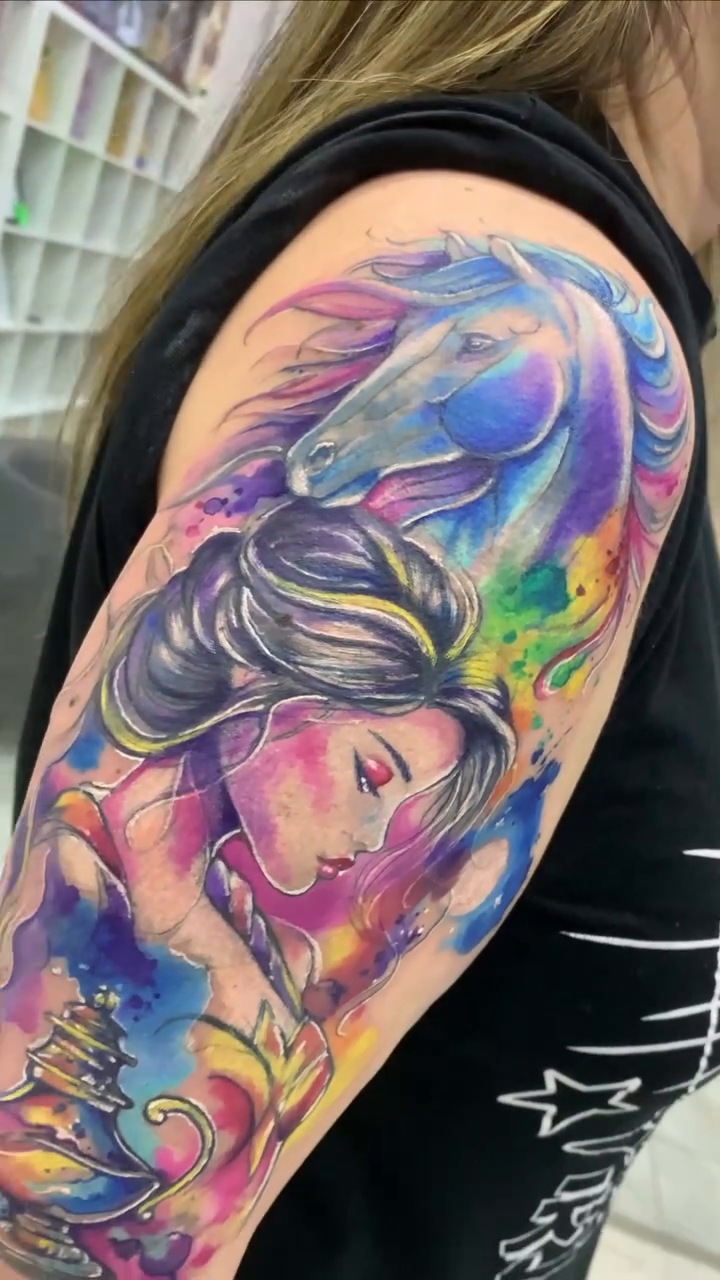
After many hours of work, this was the scene on the arm: the horse in blues and turquoise, a mane of pinks and purples and, underneath, the portrait in profile. Around them, I added yellows, greens and washes of colour flowing through the composition.
If you're worried that covering a dark tattoo means giving up colour, this is an example I can show you. I didn't make an entirely black piece, but I didn't remove black from the new drawing either: it's in the hair, outlines and other areas alongside the brighter colours.
Look at the whole piece first, then move closer to those details. The change isn't just more colour. The scale of the figures, their position and the way the design travels along the arm change too. Now the horse and the face lead the composition.
04 / A COVER-UP IN COLOUR
Don't like your tattoo, but still love what it means?
You can want to cover a tattoo and still feel that what it represents is part of you. If that's you, tell me. It helps to know what you'd like to change about the result and what you don't want to lose from the idea. Leaving a subject behind isn't the same as finding another way to tell the same story.
This project had a horse, a female figure and a story connected to nursing. Yours may have different elements. You don't have to choose the same design to explain which part of this change speaks to you.
To start assessing your case, send me a clear photo of the whole tattoo and its placement, and tell me whether you're open to extending the composition. I want to understand both the ink I have to work with and what you'd like to keep. This is a real result, not a promise that every tattoo can be approached the same way.